For years, an email address was just a utility — a login, a way to send messages, a digital formality. But Gmail has evolved far beyond that. Today, it operates as a fully integrated digital identity, quietly powering everything from cloud collaboration to advertising infrastructure. One account opens the door to an entire ecosystem — and in many cases, one simply isn’t enough.
As online workflows become more complex, the demand for scalable, flexible account management continues to grow. Businesses no longer operate in a single channel; they run parallel campaigns, manage multiple brands, test new products, and automate processes across platforms. This shift has led many professionals to explore solutions like buy gmail accounts, allowing them to bypass the friction of manual setup and move directly into execution.
Whether the goal is to buy new gmail accounts for clean, controlled environments or to buy old and new gmail accounts for a mix of flexibility and credibility, the underlying motivation is the same: efficiency at scale. In a landscape where speed often determines success, pre-configured access becomes less of a shortcut and more of a strategic necessity.
Why Gmail Accounts Are Essential in Modern Digital Workflows
Gmail sits at the center of today’s digital infrastructure, not because it is the only email provider, but because of how seamlessly it connects everything else. It is the access point to a broader ecosystem — one that includes cloud storage, document collaboration, analytics platforms, and communication tools that define modern work.
In business environments, Gmail accounts act as operational nodes. Marketing teams rely on them to launch and manage outreach campaigns. Sales departments use them for client communication and CRM integrations. Developers and QA teams depend on multiple accounts for testing environments, app simulations, and user flow validation. Even small startups quickly find themselves juggling several identities just to keep workflows organized.
Automation has only amplified this need. Tools that handle email sequences, data scraping, or account-based actions often require separate credentials to function efficiently and avoid bottlenecks. A single account becomes a limitation — not just in terms of capacity, but in terms of risk exposure.
Beyond business, Gmail plays a critical role in everyday digital life. It connects to mobile devices, syncs calendars, stores files, and enables real-time collaboration through shared documents and meetings. Its reliability and deliverability also make it a preferred channel for communication that needs to reach the inbox — not disappear into spam filters.
Across industries — from e-commerce and digital marketing to education and software development — Gmail accounts are less about sending emails and more about maintaining structured, scalable digital operations.
Why People Choose to Buy New Gmail Accounts
The decision to buy new gmail accounts is rarely about convenience alone. It’s about removing friction from processes that demand speed, scale, and separation. Creating accounts manually may seem simple at first, but at volume, it becomes a logistical challenge involving phone verification, IP management, and time-consuming setup.
Here’s why many users choose a more streamlined approach:
- Scaling marketing campaigns
Running multiple outreach or advertising campaigns requires separate identities to maintain performance and avoid overlap. - Managing multiple platforms
Different tools, marketplaces, and social platforms often require unique accounts for registration and operation. - Faster setup vs manual creation
Ready-to-use accounts eliminate repetitive registration steps and allow teams to start working immediately. - Privacy separation
Distinct accounts help isolate personal, professional, and experimental activities, reducing risk and improving organization. - Testing and automation
Developers, marketers, and analysts use multiple accounts to simulate user behavior, test systems, and automate workflows without interference.
In practice, this approach transforms account management from a bottleneck into an enabler — one that supports growth instead of slowing it down.
Buy Old and New Gmail Accounts – What’s the Difference?
Not all Gmail accounts function the same way. The distinction between newly created accounts and aged ones is more than just a timestamp — it directly affects trust, performance, and use cases.
| Feature | New Gmail Accounts | Old (Aged) Gmail Accounts |
| Creation Date | Recently created | Months/years old |
| Trust Level | Low to medium | High |
| Deliverability | Standard | Better inbox placement |
| Risk Level | Lower history risk | Depends on past usage |
| Best Use | Testing, small tasks | Marketing, outreach, ads |
New accounts offer a clean slate. They are predictable, flexible, and ideal for controlled environments such as testing, onboarding, or initial setups. There is no legacy data to worry about — no unknown history that could affect performance.
Aged accounts, on the other hand, carry digital weight. Their history often translates into higher trust signals, which can improve email deliverability and reduce the likelihood of triggering spam filters. For outreach campaigns, advertising platforms, or client-facing communication, this added credibility can make a measurable difference.
Choosing between the two — or deciding to buy old and new gmail accounts as part of a combined strategy — depends entirely on the task at hand. In many cases, the most effective systems use both: new accounts for flexibility, and aged ones for performance.
Key Benefits of Buying Gmail Accounts
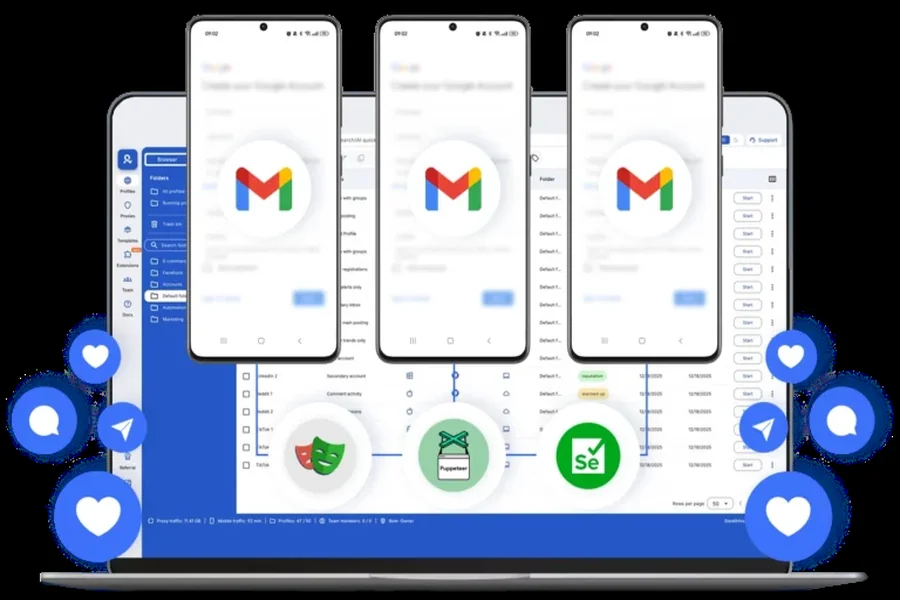
When operations start moving fast, infrastructure has to keep up. That’s where ready-made accounts step in — not as a shortcut, but as a multiplier.
Instant scalability is the headline advantage. Instead of building accounts one by one, you deploy them in batches and move straight into execution. Campaigns launch faster, teams collaborate sooner, and bottlenecks disappear.
There’s also a strong economic argument. Manual setup requires time, phone numbers, IP rotation, and constant verification. Compared to that, pre-configured accounts often represent a more efficient allocation of resources — especially for teams working at scale.
Workflow management improves as well. With clearly segmented accounts, tasks stay organized, risks are isolated, and performance becomes easier to track. No more tangled inboxes or overlapping responsibilities.
And then there’s performance. Campaigns — particularly outreach and advertising — tend to benefit from structured account usage. Deliverability improves, engagement becomes more predictable, and testing different strategies becomes far more practical.
Types of Gmail Accounts You Can Buy
Not all accounts are created equal, and choosing the right type depends on the job you’re trying to get done.
Fresh Gmail accounts are the clean slate. No history, no baggage — ideal for testing environments, new projects, or simple verification tasks.
Aged Gmail accounts bring history into the equation. Their longevity often translates into higher trust, which can be useful for outreach, advertising, or any scenario where credibility matters.
Phone-verified accounts (PVA) add another layer of stability. Verified through real numbers, they tend to be more resilient and better suited for long-term use.
Bulk Gmail accounts are all about volume. When operations expand — whether it’s marketing, automation, or multi-platform management — having a ready pool of accounts makes scaling far more manageable.
Where to Buy Gmail Accounts Safely
The question isn’t just where to buy gmail accounts, but how to do it without introducing unnecessary risk into your workflow.
A reliable provider stands on a few clear pillars. Reputation is the first — consistent feedback, visible track record, and real user experiences. Then comes verification: accounts that are properly set up, often phone-verified, with clear recovery options in place.
Technical details matter too. Accounts created with unique IP addresses tend to behave more naturally, reducing the likelihood of flags or restrictions. Add responsive customer support to the mix, and you have a provider that’s built for long-term use, not just quick transactions.
On the flip side, suspicious sellers often reveal themselves quickly — unrealistic pricing, vague descriptions, or pressure to skip verification steps. In this space, caution isn’t optional; it’s part of the process.
How to Choose the Right Provider
Selecting a provider is less about luck and more about disciplined evaluation:
- Check real customer feedback — not just testimonials, but patterns in reviews
- Evaluate pricing against quality — extremely low prices often signal compromises
- Confirm account verification details, especially PVA status
- Test customer support responsiveness before committing
- Avoid offers that feel rushed or “too good to be true”
A careful selection upfront prevents far more complicated issues later.
Risks of Buying Gmail Accounts and How to Avoid Them
Like any digital asset, Gmail accounts come with potential risks — most of which stem from poor sourcing or careless handling.
Scams are the most obvious threat. Fake sellers or low-quality providers may deliver compromised accounts or nothing at all. Then there’s the risk of account suspension, especially if usage patterns trigger automated systems.
Account history can also be a hidden variable. An aged account with a problematic past — spam activity, for example — can undermine your efforts instead of supporting them. Security vulnerabilities, such as weak recovery options, add another layer of concern.
Mitigation is straightforward but essential. Work with trusted providers, enable two-factor authentication immediately, and update all credentials upon access. Treat each account as an asset that needs protection from day one.
Best Practices for Managing Multiple Gmail Accounts
Owning multiple accounts is one thing; managing them effectively is another.
Start with structure. Assign a clear role to each account — marketing, support, testing — and stick to it. This reduces overlap and keeps workflows clean.
Security should be systematic. Password managers simplify access while maintaining strong credentials, and updated recovery options ensure you’re never locked out.
Activity matters more than many realize. Dormant accounts can become unstable over time, so regular, natural usage helps maintain reliability.
Finally, organization tools inside Gmail — labels, filters, categories — are not optional extras. They’re essential for keeping communication manageable when volume increases.
Step-by-Step Guide: How to Buy Gmail Accounts Safely
A structured approach minimizes risk and maximizes value:
- Define your purpose — know exactly how the accounts will be used
- Choose the appropriate type — new for flexibility, aged for credibility
- Research providers thoroughly — reputation first, price second
- Verify account details — confirmation of verification and recovery options
- Complete the purchase using secure payment methods
- Immediately update credentials and enable security features
This process turns what could be a gamble into a controlled acquisition.
Use Cases: How Businesses Use Gmail Accounts
Across industries, Gmail accounts serve as operational tools rather than simple inboxes.
In email marketing, they enable segmented campaigns and personalized outreach. SEO teams rely on them for link-building, communication, and platform access. Social media managers use separate accounts to control multiple profiles without overlap.
Customer support systems often depend on dedicated accounts to maintain fast, organized responses. Meanwhile, integration with cloud tools makes Gmail a hub for data storage, document sharing, and real-time collaboration.
The common thread is clear: multiple accounts enable structured, scalable execution.
Common Myths About Buying Gmail Accounts
“It’s illegal” — In reality, purchasing accounts is not inherently unlawful; issues arise only when they’re used in violation of platform policies.
“It’s too expensive” — Compared to the time and resources required for manual setup, it can actually be more efficient.
“It’s always risky” — Risk exists, but it’s largely tied to poor provider choice and weak security practices. Managed properly, the process is predictable.
Conclusion
Gmail accounts have evolved into essential building blocks of modern digital operations. Whether used for marketing, collaboration, or system management, their value lies in how effectively they are deployed and maintained.
Buying accounts — when done carefully — offers speed, flexibility, and scalability that manual processes simply can’t match. The key is discipline: choosing the right provider, securing each account, and using them with purpose.
In a landscape defined by pace and precision, those who manage their digital infrastructure well gain a clear edge.
FAQ – Buying Gmail Accounts
Q1: Why should I buy new Gmail accounts?
They provide a clean, flexible starting point for testing, onboarding, or launching new workflows without legacy constraints.
Q2: Is it safe to buy old and new Gmail accounts?
Yes, when sourced from reputable providers and secured properly after purchase.
Q3: Where to buy Gmail accounts without risk?
Focus on providers with strong reputations, verified accounts, and transparent support systems.
Q4: What is the difference between PVA and non-PVA accounts?
PVA accounts are verified with phone numbers, offering higher security and stability compared to unverified ones.
Q5: Can Gmail accounts be used for business purposes?
Absolutely. Many organizations use them for communication, marketing, and operational management.