The period products people in the United Kingdom buy most often have changed more in the past five years than in the previous fifty. Tampons and pads used to be the unquestioned default. Now they share the conversation with reusable cups, discs, and a category that has grown faster than almost any other in women’s wellness: period underwear. The shift is partly about comfort, partly about sustainability, and partly about how the design and absorbency of these products has finally caught up with what women actually want from them.
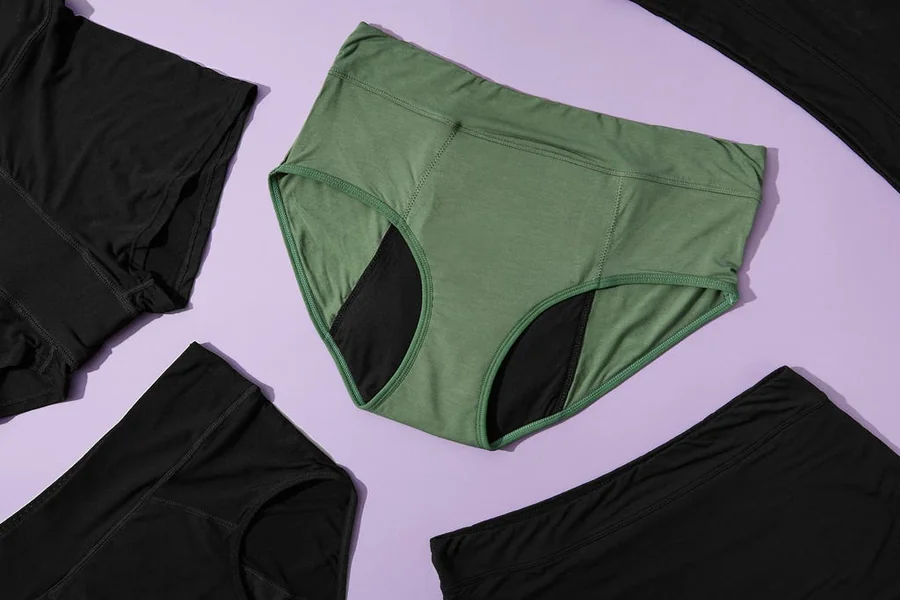
For anyone who has not yet tried a pair, the basic idea is simple. Period underwear looks and feels like normal underwear but is engineered with multiple absorbent layers built directly into the gusset. The outer layers are moisture-wicking, the middle layers absorb fluid, and the inner layer is leak-resistant. Worn alone on lighter days or as a backup on heavier ones, a single pair replaces or supplements a handful of disposable products without changing the feel of getting dressed.
Table of Contents
ToggleWhat Makes the Newer Designs Different
Older period underwear had a reputation for being bulky, hot, or visually obvious under clothing. The category has matured well beyond that. Modern designs from established makers are slim, breathable, and indistinguishable from a typical pair of underwear under jeans, leggings, or dresses. They come in a range of cuts including bikini, brief, thong, hipster, and high-waisted, and in absorbency levels that match different flow days rather than forcing women to wear the heaviest option every time.
absorbent period underwear from companies like Saalt is part of this newer wave. The materials are designed for direct skin contact, and the absorbency tiers let women choose lighter pairs for lighter days, regular pairs for moderate flow, and heavy-flow pairs for the days when leaks are most likely. Many users build a small set rather than a full drawer because pairs can be washed and reused, which keeps the total cost lower than the equivalent volume of disposable products would be over the same period of time.
Comfort, Cost, and Sustainability All in One Decision
For women in the United Kingdom who have been re-evaluating the household budget against rising costs, period underwear is one of those rare changes where the cost saving, the comfort improvement, and the environmental benefit all point in the same direction. A pair lasts for years with proper care, replaces hundreds of disposable products over its lifespan, and produces dramatically less waste than the equivalent volume of tampons and pads. Some users report fewer irritation issues compared to disposable products because the materials are designed for skin contact and contain no fragrance, bleach, or unnecessary additives.
There is also a practical comfort argument that often gets overlooked. Period underwear stays put. There is nothing to insert and nothing to attach. For sleeping, working out, or simply moving through a normal day, the lack of fuss is itself a quality-of-life improvement that women rarely talk about until they have tried it.
Building a Sensible Starter Set
The most common piece of advice for newcomers is to start with a small set rather than going all in. Three to five pairs covers most cycles when combined with whatever the woman already uses. From there, it becomes easy to expand into different cuts and absorbencies based on what works best. Care is simple. Rinse in cold water after each wear, machine wash with regular laundry, and air dry. Most pairs last several years when washed properly.
A Category That Is Here to Stay
The wider point is that period underwear has moved from a curiosity into a mainstream category in the United Kingdom. It is no longer the experimental option that requires a backup just in case. For many women it is the primary product, and for others it is a reliable backup that makes other products work better. Either way, it deserves a place in the conversation alongside the more familiar choices that used to dominate the aisle.
FAQ
How does period underwear actually work? Multiple absorbent layers are built into the gusset of the underwear. The outer layer wicks moisture, the middle layers absorb fluid, and the inner layer prevents leaks.
How many pairs does someone typically need? Most women start with three to five pairs and expand from there based on flow and personal preference. Some use period underwear as their main product, while others use it alongside cups, discs, or other options.
How long does a pair last? With proper care, period underwear typically lasts several years. Rinsing in cold water after each wear, machine washing with regular laundry, and air drying are the standard care steps.
Can period underwear handle a heavy flow? Yes. Most brands offer absorbency tiers, including heavy-flow pairs designed for the days with the most volume. Pairing a heavy-flow pair with another product is also an option for the heaviest days.
Is period underwear environmentally friendly? Yes. A single reusable pair replaces hundreds of disposable products over its lifespan, which produces dramatically less waste than the equivalent volume of tampons and pads.