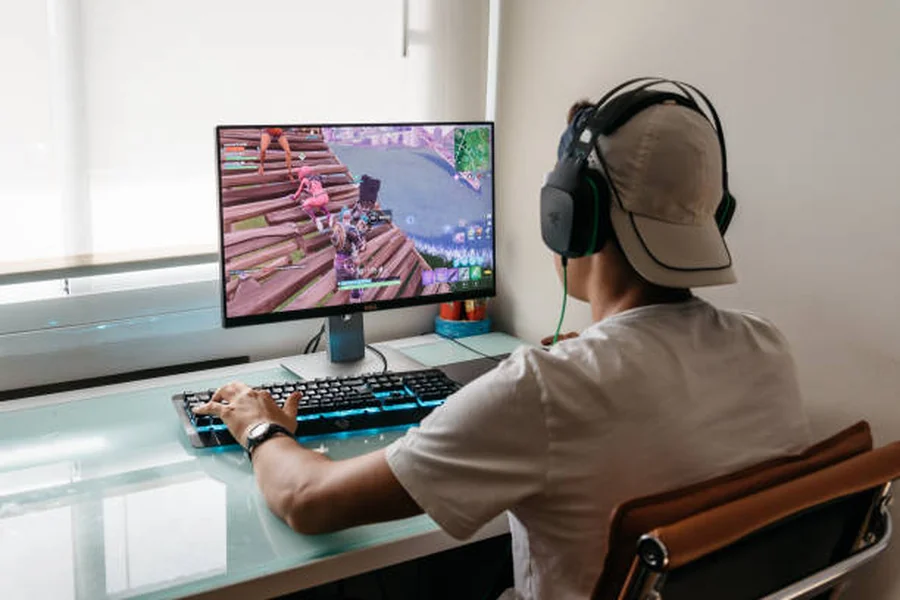
Online gaming is becoming more social, responsive, and visually rich. Faster connections, better mobile hardware, live features, cross-device access, and more detailed digital environments are changing how players interact with games and with each other.
The future of online gaming is not likely to be defined by a single technology. Instead, several developments are coming together to create experiences that feel more connected, more interactive, and more immersive.
Table of Contents
ToggleOnline Gaming Is Becoming More Connected
Connection is now one of the central parts of modern online gaming. Many games are built around shared spaces, multiplayer features, live communication, and communities that continue outside the game itself.
Social Features Are Becoming Part of the Experience
Players can now interact through voice chat, text chat, group systems, shared events, and community features.
These tools can make online gaming feel less isolated by allowing players to:
- Join teams or groups
- Communicate during play
- Take part in live events
- Build long-term communities
- Share progress with others
The social side of gaming is becoming increasingly important because many players now expect online titles to provide some form of connection beyond individual gameplay.
Live Interaction Is Growing Across Gaming Platforms
Real-time features are appearing in more parts of digital entertainment.
Live Formats Create a Stronger Sense of Activity
Online games can now include live events, real-time competitions, streamed content, and interactive sessions that change as players take part.
Casino-style gaming has also adopted this approach. On platforms such as JM8, live formats can exist alongside digital game categories, showing how online platforms are combining traditional gaming with real-time interaction.
The result is a form of entertainment that feels more immediate because users can respond to events as they happen.
Mobile Gaming Is Becoming More Capable
Smartphones are no longer limited to simple casual games. Modern mobile devices can support detailed graphics, multiplayer features, streaming, and complex interfaces.
Players Expect Consistency Across Devices
A player may start on a desktop and later continue on a phone or tablet. This creates demand for interfaces and accounts that work consistently across different screens.
Developers increasingly focus on:
- Responsive controls
- Cloud-based progress
- Cross-device accounts
- Compact menus
- Faster loading
- Clear touch interfaces
These improvements help reduce the gap between desktop and mobile gaming.
Immersion Is About More Than Graphics
High-quality visuals can help a game feel more detailed, but immersion depends on several elements working together.
Sound, Motion, and Interface Design All Matter
Background audio, animation, lighting, responsive controls, and visual feedback can make digital environments feel more active.
Immersion can also come from consistency. If the sound, visual style, controls, and theme all support the same idea, the game feels more coherent.
This applies to many forms of online gaming, from multiplayer titles to live casino environments.
Personalisation Is Becoming More Common
Players increasingly expect digital platforms to adapt to their preferences.
Interfaces Can Become More Relevant Over Time
Some gaming platforms already use favourites, recent activity, recommendations, saved settings, or personalised menus.
These features can make large content libraries easier to use.
Instead of starting from the same homepage every time, users can return to content they already know or receive suggestions based on previous activity.
Within services such as JM8 casino, this type of organisation can help users move between different digital game categories without repeatedly searching from the beginning.
Cross-Platform Play Is Changing Multiplayer Gaming
One of the most important developments in online gaming is the reduction of barriers between devices.
Players Can Connect Across Different Systems
Cross-platform features allow users on different devices to take part in the same game or community.
This creates larger player pools and makes it easier for friends to play together even when they do not use identical hardware.
It also reflects a broader shift in the industry, where the account and community are becoming more important than the device itself.
Artificial Intelligence Is Influencing Game Experiences
AI is becoming more useful in game development and platform management.
Smarter Systems Can Support More Dynamic Experiences
AI can be used for areas such as matchmaking, moderation, non-player character behaviour, content organisation, and customer support.
Developers can also use AI-assisted tools during production to help with testing, animation, dialogue systems, and asset creation.
The value of these systems depends on how well they support the player experience rather than adding complexity for its own sake.
Cloud Technology Could Reduce Hardware Barriers
Cloud gaming is another area that could shape the future of online play.
Processing Can Move Away From the Player’s Device
In cloud-based gaming, much of the processing takes place on remote servers, while the user receives the game through a streamed connection.
This can allow more demanding games to run on devices that might not otherwise support them.
Performance still depends heavily on connection quality, but improvements in network infrastructure can make cloud access more practical for a wider range of players.
Online Games Are Becoming Broader Entertainment Spaces
Games increasingly contain more than a single activity.
Platforms Can Combine Several Forms of Entertainment
Modern online gaming spaces may include competitive play, social areas, live events, customisation, streaming features, and community tools.
This means players may enter a platform for one reason and remain for several others.
The shift is turning some games into ongoing digital spaces rather than experiences with a clear beginning and end.
Conclusion
The future of online gaming is being shaped by connection, interaction, personalisation, mobile access, live features, cloud technology, and richer digital environments.
The biggest change is how these elements are starting to work together. Players are no longer limited to isolated sessions on a single device. They can communicate, switch platforms, take part in live activity, and return to personalised spaces built around their preferences.
As technology continues to develop, online gaming is likely to become more connected and interactive while offering increasingly detailed digital experiences. The focus will continue moving toward platforms that combine gameplay, communication, community, and entertainment within one connected environment.