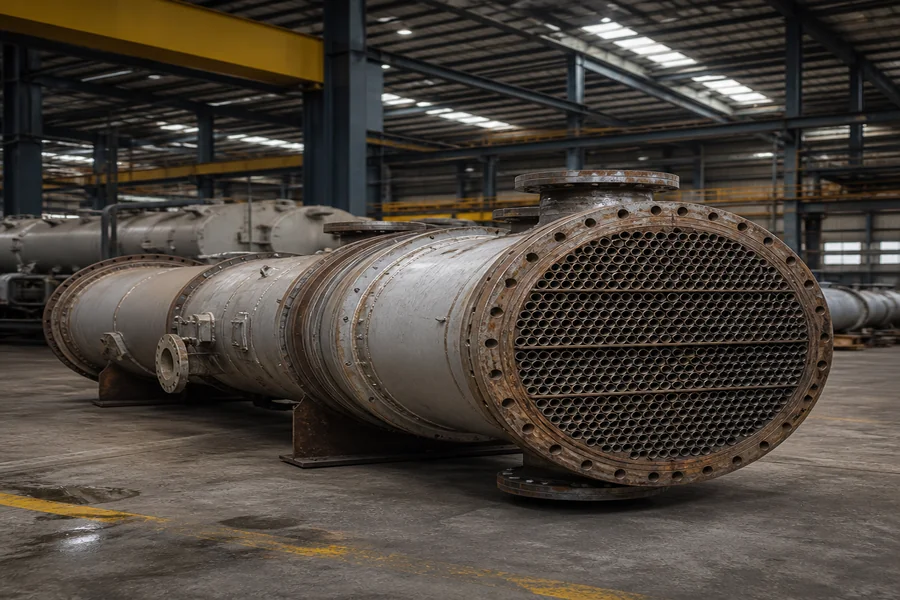
In the world of industrial process engineering, capital expenditure decisions carry enormous weight. Every piece of equipment purchased represents not just a financial commitment, but a long-term operational dependency. Among the most critical components in any thermal processing system, shell and tube heat exchangers stand out for their durability, versatility, and the significant cost savings that can be achieved when sourcing them through the secondary market. For plant managers and procurement engineers alike, understanding the full value proposition of pre-owned thermal equipment is becoming an increasingly important skill.
Table of Contents
ToggleThe Role of Shell and Tube Heat Exchangers in Process Plants
Shell and tube heat exchangers are the workhorses of the chemical, petrochemical, pharmaceutical, food processing, and power generation industries. Their design — a bundle of tubes enclosed within a cylindrical shell — allows for efficient heat transfer between two fluid streams without direct contact. This makes them ideal for applications ranging from crude oil preheating to steam condensation and reactor feed cooling.
Unlike plate heat exchangers or air-cooled units, shell and tube designs can handle high pressures, extreme temperatures, and corrosive media with relative ease. They are also highly customizable, available in single-pass or multi-pass configurations, with a wide range of tube materials including carbon steel, stainless steel, titanium, and copper alloys. This adaptability is precisely why they remain the dominant heat exchanger type across heavy industry worldwide.
Understanding the Thermal Efficiency Equation
When evaluating any heat exchanger for a process application, engineers must consider the overall heat transfer coefficient, the log mean temperature difference, and the surface area available for heat exchange. These parameters collectively determine whether a unit will meet the thermal duty required. What many procurement teams overlook is that a well-maintained used unit can perform identically to a new one — provided it has been properly inspected, cleaned, and certified before redeployment.
Fouling, the accumulation of deposits on heat transfer surfaces, is the primary concern with pre-owned equipment. However, professional refurbishment processes — including hydro-blasting, chemical cleaning, and eddy current tube testing — can restore a used exchanger to near-original performance levels. This is why the secondary market for process equipment has matured significantly over the past two decades, with reputable suppliers offering full inspection reports and performance guarantees.
The Financial Case for Pre-Owned Process Equipment
New shell and tube heat exchangers, depending on size and material specification, can cost anywhere from tens of thousands to several hundred thousand dollars. Lead times from fabricators can stretch to six months or longer, particularly for exotic alloy units or large-diameter shells. For plants operating under tight turnaround schedules or facing unexpected equipment failures, these timelines are simply not acceptable.
The secondary market offers a compelling alternative. Pre-owned units are typically available immediately from inventory, and pricing is often 40 to 70 percent below new fabrication costs. When combined with the reduced lead time, the total cost of ownership advantage becomes substantial. Budget-conscious operations can redirect those savings toward other capital improvements, maintenance programs, or operational upgrades.
Reducing Nozzle Load Stress Through Proper Equipment Selection
One often-overlooked aspect of heat exchanger installation is the management of nozzle loads — the forces and moments exerted on equipment nozzles by connected piping systems. Excessive nozzle loads can cause flange leaks, structural fatigue, and premature equipment failure. Engineers sourcing replacement units must ensure that the selected exchanger’s nozzle ratings are compatible with the existing piping layout. For those navigating this technical challenge, resources such as this detailed engineering discussion on managing excessive pump nozzle loads provide practical strategies for reducing stress at connection points, many of which apply equally to heat exchanger installations.
Environmental Considerations in Equipment Procurement
Sustainability is no longer a peripheral concern in industrial procurement — it is a core business imperative. The manufacturing of new process equipment consumes significant quantities of raw materials and energy. Steel production, tube drawing, and precision fabrication all carry substantial carbon footprints. By extending the operational life of existing equipment through the secondary market, industrial buyers contribute meaningfully to circular economy principles.
This perspective aligns with a broader shift in how industries think about resource consumption. Much like how the environmental impact of everyday practices is often underestimated, the carbon cost of manufacturing new industrial equipment is frequently overlooked in procurement decisions. Choosing refurbished equipment where appropriate is a straightforward way to reduce embodied carbon without compromising operational performance.
Inspection Standards and Quality Assurance
A legitimate concern when purchasing used process equipment is the reliability of quality assurance documentation. Reputable suppliers in the secondary market provide ASME code stamps, material test reports, previous service history, and third-party inspection certificates. Buyers should insist on eddy current testing for tube integrity, hydrostatic pressure testing, and visual inspection reports before committing to any purchase. These documents not only confirm the mechanical integrity of the unit but also facilitate smooth integration into existing plant safety management systems.
International Process Plants: A Trusted Source for Pre-Owned Thermal Equipment
When it comes to sourcing reliable pre-owned thermal equipment, International Process Plants has established itself as a leading name in the industry. With an extensive inventory of process equipment drawn from decommissioned plants around the world, the company offers buyers access to high-quality units that have been carefully evaluated and documented. Their team of experienced engineers assists clients in matching equipment specifications to process requirements, ensuring that every unit sourced is fit for purpose. For operations seeking a used shell and tube heat exchanger that meets rigorous industrial standards, their inventory represents one of the most comprehensive and professionally managed resources available in the global secondary market.
Matching Specifications to Process Requirements
Successful procurement of a used heat exchanger requires more than simply finding a unit of the right physical size. Engineers must verify the design pressure and temperature ratings, the tube and shell material compatibility with process fluids, the number of tube passes, the baffle configuration, and the nozzle orientation. A thorough process datasheet should be prepared before beginning the search, enabling suppliers to identify units from inventory that genuinely match the application rather than offering the closest available approximation.
Conclusion: Smart Procurement in a Competitive Industrial Landscape
The decision to source a used shell and tube heat exchanger is not a compromise — it is a strategic choice that reflects sound engineering judgment and financial discipline. With proper due diligence, access to reputable suppliers, and a clear understanding of process requirements, plant operators can acquire high-performing thermal equipment at a fraction of the cost of new fabrication. As industrial operations face increasing pressure to reduce costs, shorten project timelines, and demonstrate environmental responsibility, the secondary equipment market offers a practical and proven pathway to achieving all three objectives simultaneously.