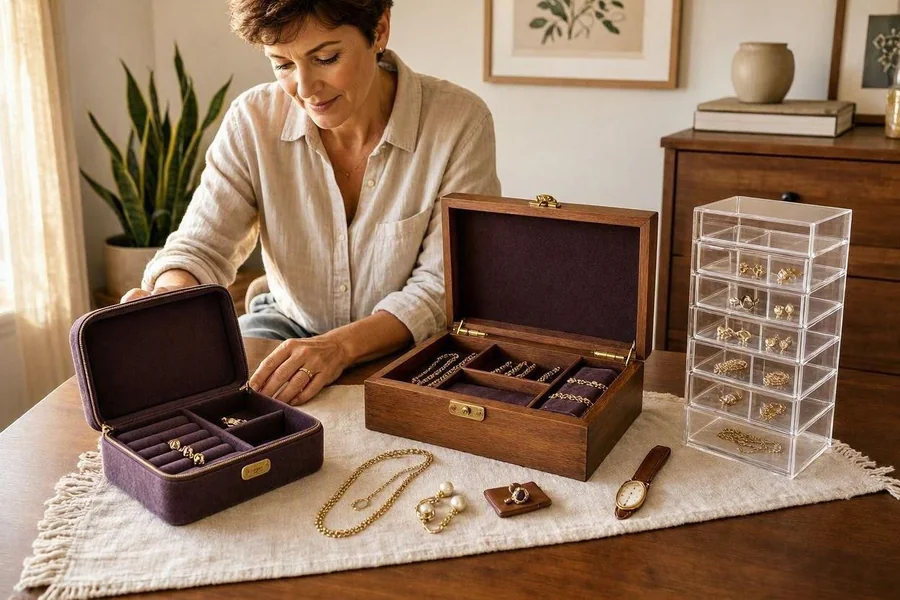
Jewellery is more than an accessory. A favourite necklace may remind you of someone special, while a watch, ring, or bracelet can become a valuable part of your collection over time. But keeping these pieces safe can become difficult when your collection starts to grow.
Necklaces get tangled, earrings disappear in drawers, rings become mixed together, and delicate pieces can pick up scratches or lose their shine. This is why choosing the right jewellery storage is worth the effort.
Modern jewellery boxes are no longer just decorative containers. People now want storage that looks elegant, keeps different pieces organised, and makes everyday access easier. Current 2026 storage trends also show growing interest in modular organisation, premium finishes, soft-lined compartments, and storage that combines practicality with luxury.
If you are looking for inspiration, exploring the world of jewellery boxes can help you understand the different styles and storage options available.
Table of Contents
ToggleWhy a Good Jewellery Box Matters
Leaving jewellery loose on a dressing table may seem harmless, but it can create several problems.
Chains can become tangled with other pieces. Rings may scratch against one another. Earrings can become separated from their pairs. Silver jewellery can also tarnish when exposed to air and moisture over time.
A dedicated jewellery box gives every item its own space.
This is especially useful if you own different types of jewellery. A box with ring rolls, separate compartments, drawers, and necklace storage makes it easier to organise your collection without putting everything into one crowded space.
A good jewellery box can also reduce the amount of handling your jewellery receives. Instead of searching through a drawer every morning, you can see your collection clearly and choose what you want in seconds.
2026 Jewellery Storage Trends Worth Knowing
Jewellery storage has become more design-conscious in recent years. Instead of hiding storage inside a drawer, many people now choose pieces that complement their bedroom, dressing room, or vanity.
1. Larger Storage for Growing Collections
Small jewellery boxes are useful when you own only a few pieces. However, they quickly become impractical as your collection grows.
Larger boxes with multiple drawers provide dedicated areas for different jewellery types. You might use one section for rings, another for earrings, and separate areas for bracelets and necklaces.
This approach also makes future purchases easier because you already have space available.
2. Premium Materials and Luxury Finishes
The appearance of jewellery storage matters more than ever.
Wooden finishes, leather-style exteriors, polished surfaces, and carefully designed interiors can turn a storage box into part of your room’s décor.
For people who enjoy luxury accessories, a premium jewellery box can feel more like furniture than a simple organiser.
Aevitas UK, for example, currently offers jewellery boxes in several premium finishes, including white gloss, wood and bonded leather options. Its collection also includes extra-large designs intended for larger jewellery collections.
3. Soft and Protective Interiors
The inside of a jewellery box is just as important as its exterior.
Jewellery should not simply be thrown into a box and left touching other pieces. Soft-lined compartments can help reduce contact between items and make the storage experience more practical.
Dedicated ring rolls are particularly useful for rings, while individual sections can help keep earrings and other small pieces together.
For necklaces, look for storage that keeps chains separated. This can save you from spending several minutes trying to untangle them before going out.
4. Organisation Over Decoration
One of the biggest changes in jewellery storage is the move towards practical organisation.
A beautiful box is useful, but it should also work for your collection.
Before buying one, think about what you actually own. Someone with dozens of rings has different requirements from someone whose collection mainly consists of long necklaces and bracelets.
The best choice is therefore not necessarily the biggest or most expensive box. It is the one that matches your collection.
How to Choose the Right Size Jewellery Box
Size is one of the first things to consider.
If you only own a few everyday pieces, a compact organiser may be enough. However, buying a very small box for a large collection usually leads to overcrowding.
Ask yourself three simple questions:
- How many jewellery pieces do I own today?
- What types of jewellery do I have?
- Am I likely to buy more pieces in the future?
If your collection is growing, choosing a larger box from the beginning can be more practical.
Extra space also makes it easier to keep jewellery separated instead of forcing several pieces into the same compartment.
Should You Keep Watches and Jewellery Together?
This depends on your collection and the type of storage you choose.
A traditional jewellery box may be ideal for rings, necklaces, earrings and bracelets. Watches, especially valuable mechanical and automatic watches, often benefit from dedicated storage.
A watch should not simply be placed loose inside a jewellery drawer where it can move against other objects.
For collectors who own both watches and jewellery, combining specialised storage solutions can create a much more organised setup.
Aevitas UK offers jewellery storage alongside watch boxes, watch rolls, watch winders and watch safes, making it possible to build a coordinated storage system for different accessories.
What Happens If You Don’t Wind an Automatic Watch?
This is another common question for watch owners.
An automatic watch uses movement from the wearer to wind its mainspring. When it is not worn for long enough, it can eventually stop once its stored power runs out.
That does not automatically mean the watch has been damaged. A stopped automatic watch can generally be restarted and set again according to the manufacturer’s instructions.
However, collectors who own several automatic watches may prefer a watch winder so selected watches remain running when they are not being worn.
If you want to explore this subject in more detail, Browse Aevitas What Happens If You Dont provides a useful starting point for understanding automatic watch storage and long-term care.
How to Keep Jewellery Looking Its Best
Good storage is only one part of jewellery care.
Try to keep jewellery away from unnecessary moisture, cosmetics and harsh chemicals. It is also sensible to follow the care instructions supplied with individual pieces because different metals and gemstones can have different requirements.
When putting jewellery away, make sure pieces are reasonably clean and dry. Avoid throwing multiple delicate items into one compartment.
For necklaces, close the clasp before storage when practical. This can help reduce the chance of chains becoming tangled.
For valuable jewellery, consider keeping an inventory with photographs and purchase information. This can be useful for insurance and personal records.
Why Jewellery Storage Makes a Great Gift
A quality jewellery box can also make a thoughtful gift.
It works particularly well for birthdays, anniversaries, Mother’s Day, Christmas, engagements and other milestones.
Unlike many short-term gifts, a jewellery organiser can be used for years. It also gives the recipient a dedicated place to keep pieces that already have sentimental value.
The best gift choice depends on the person’s collection. A compact box may suit someone with a small everyday collection, while a larger multi-drawer design could be better for a serious jewellery lover.
A More Organised Way to Enjoy Your Collection
The purpose of a jewellery box is not simply to hide jewellery away.
The right storage makes your collection easier to see, easier to access and easier to care for. It can also prevent the everyday frustration of tangled chains, missing earrings and overcrowded drawers.
In 2026, the strongest jewellery storage trend is really about combining organisation, protection and style. Buyers want storage that works well but also looks good in their home.
Whether you own a few sentimental pieces or a growing collection of fine jewellery, choosing storage based on your actual needs will always be more useful than simply buying the largest box available.
For anyone building a premium collection, Aevitas UK store is worth exploring alongside your other storage options.
Frequently Asked Questions
What is the best way to store jewellery at home?
Keep jewellery in a dedicated organiser with separate compartments. Store delicate pieces away from items that could scratch them, and keep necklaces separated to reduce tangling.
Are jewellery boxes worth buying?
Yes. A good jewellery box can keep your collection organised, reduce tangling and make everyday access much easier. It can also provide a more suitable environment than a loose drawer or bedside table.
What size jewellery box should I buy?
Choose a size based on your current collection and expected future needs. If you have many rings, bracelets and necklaces, a larger multi-compartment box is usually more practical.
How do I stop necklaces from getting tangled?
Keep each necklace in its own space rather than placing several chains together. Dedicated hooks or separate compartments can make a major difference.
Should silver jewellery be kept in a jewellery box?
Yes. A suitable jewellery box can provide a more organised storage environment and reduce unnecessary exposure to air and contaminants that contribute to tarnishing.
Can a jewellery box store watches?
Some jewellery storage systems include dedicated watch holders or trays. However, valuable automatic watches may be better suited to dedicated watch storage designed specifically for watches.
What should I look for in a luxury jewellery box?
Look for strong construction, suitable compartments, a protective interior, enough capacity for your collection and a design that fits your home. The most attractive box is not always the most practical, so balance appearance with storage needs.
Is a large jewellery box better than a small one?
Not always. A small box is perfect for a compact collection, while a larger design makes more sense if you own many pieces. Choose based on your actual storage requirements.